

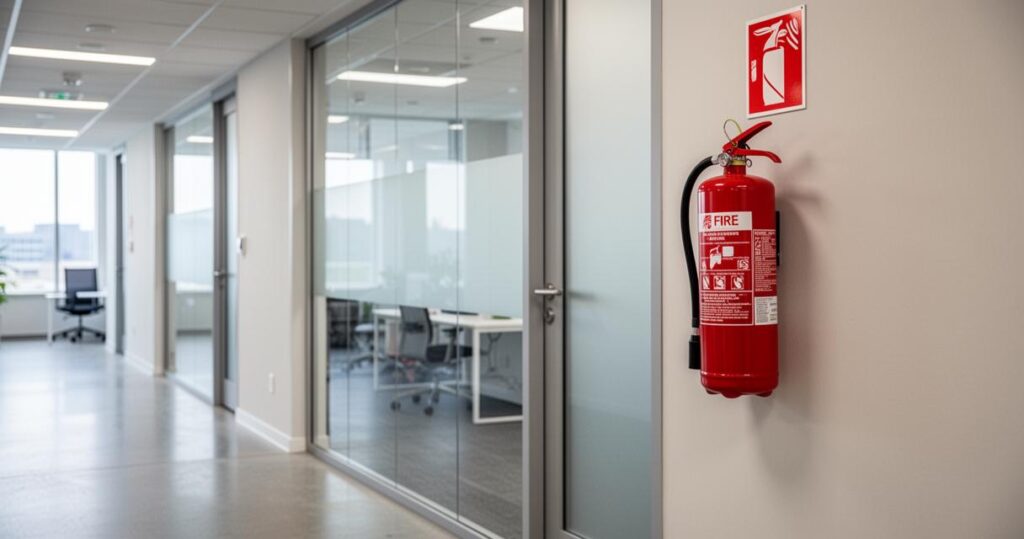
Fire extinguishers are one of the most fundamental pieces of fire safety equipment found in any commercial setting. Yet despite their ubiquity, many business owners remain uncertain about which types they need, how to maintain them properly, and what their legal obligations actually entail. This guide cuts through the confusion to explain why these portable devices remain an indispensable part of any credible workplace fire safety strategy.
Key takeaways
- Fire extinguishers are essential safety tools designed to contain minor workplace fires before they escalate into major threats.
- Businesses must conduct thorough fire risk assessments to determine the appropriate types and quantities of extinguishers required for their specific hazards.
- Extinguishers are categorized by fire class, requiring owners to select specific agents—such as water, foam, CO2, or wet chemical—based on the combustible materials present.
- Legal regulations mandate that business owners ensure fire safety equipment is accessible, properly installed, and clearly marked with identification signs.
- Employers must perform monthly internal visual checks and contract qualified professionals for mandatory annual maintenance and servicing.
- Comprehensive staff training, including the PASS technique, is critical to ensure employees can safely and effectively operate extinguishers during an emergency.
- Expired or discharged extinguishers must be replaced immediately and disposed of responsibly to maintain workplace safety standards.
The Role of Fire Extinguishers in Protecting Your Business Premises
How fire extinguishers help contain small fires before they escalate
When a fire breaks out in a workplace, the first few moments are critical. A small, contained blaze can become a serious threat remarkably quickly, and the presence of a suitable portable fire extinguisher in the right location can make all the difference. Acting swiftly on a minor fire before it spreads is precisely the purpose these devices serve — they are not intended to tackle large, established fires, but rather to provide staff with the means to address an incident at its earliest stage, protecting both lives and property.
A robust fire safety strategy depends on more than simply placing extinguishers around the building. Effective fire hazard prevention begins with a thorough fire risk assessment, which identifies the specific risks present in your premises and informs decisions about equipment placement. Guidance generally recommends at least two extinguishers per floor, though the precise requirements depend on the size of the building and the nature of the hazards involved.

Choosing the Right Type of Fire Extinguisher for Your Workplace
Not all fires are the same, and using the wrong extinguisher can actually worsen a situation rather than resolve it. Understanding fire extinguisher classes is therefore essential for any responsible business. Fires are categorised according to the material involved: Class A covers ordinary solid combustibles such as wood, paper, and textiles; Class B relates to flammable liquids; Class C involves flammable gases; Class D concerns flammable metals; and Class F applies to cooking oils and fats. Electrical fires are also a distinct category requiring specific equipment.
The main fire extinguisher types available to UK businesses each address different fire classes. Water extinguishers, identified by a red label, are effective on Class A fires but must never be directed at electrical equipment or flammable liquids. Foam extinguishers, marked in cream, work on Class A and Class B fires but are equally unsuitable for live electrical hazards. Electrical fire safety is best served by CO₂ extinguishers, which carry a black label and are the standard choice for offices and server rooms. Dry powder extinguishers offer versatility across Classes A, B, and C, though their use indoors is generally discouraged as the powder can severely reduce visibility and cause disorientation. For commercial kitchen fire safety, wet chemical extinguishers with a yellow label are specifically designed to tackle Class F fires involving cooking oils and deep fat fryers, making them an essential requirement in catering environments.
Careful thought should also be given to fire extinguisher placement. Water-based devices are best positioned near exits and fire alarm call points, whilst specialist extinguishers should remain accessible without being situated too close to the hazards they are intended to address. All extinguishers should be fixed securely to walls or stands and clearly marked with identification signs.
Fire Extinguisher Maintenance and Legal Responsibilities for Business Owners
Keeping your fire extinguishers in proper working order
Owning the correct extinguishers is only part of the obligation. Under the Regulatory Reform (Fire Safety) Order 2005, businesses in England and Wales are legally required to ensure their fire safety equipment is appropriate, accessible, and regularly maintained. The Responsible Person — typically the employer or building owner — carries this duty, and failure to comply can result in legal action, fines, and increased liability.
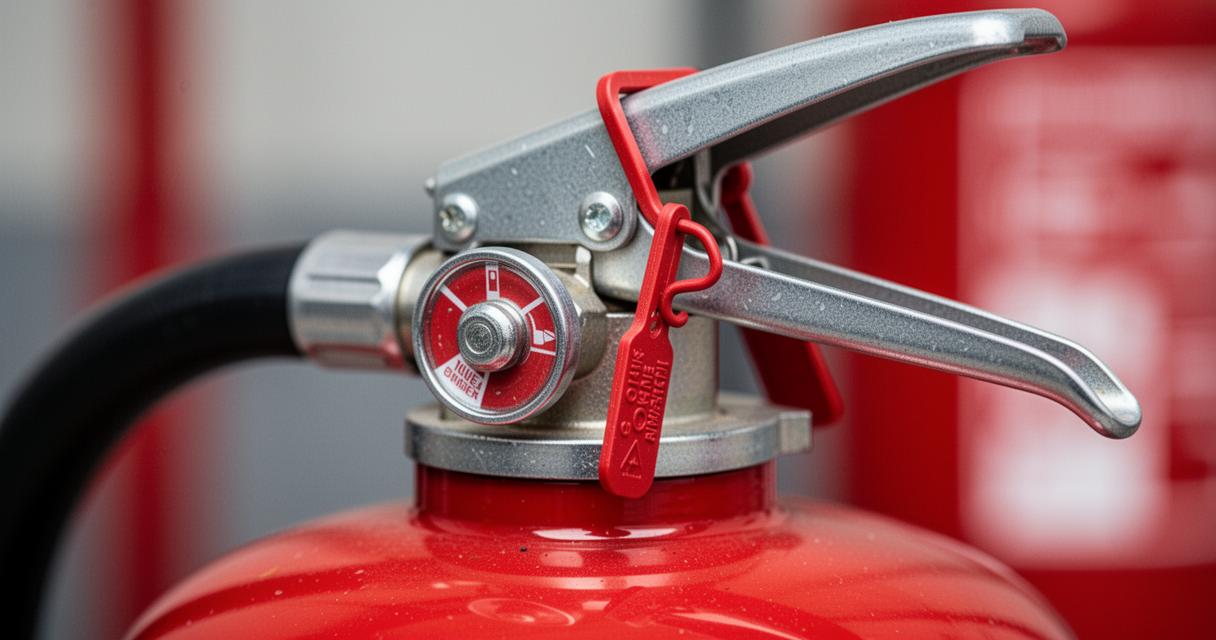
Fire extinguisher maintenance involves two complementary practices. Monthly visual inspections should be carried out by a trained member of staff, checking for obvious damage, blocked access, and correct pressure. Beyond these routine checks, annual fire servicing by a qualified professional is mandatory. These yearly inspections examine the extinguisher in detail, confirming that pressure levels are correct and that there is no structural damage. Records of all servicing activity, including service labels and entries in a fire safety logbook, are essential for demonstrating fire safety compliance. It is also worth noting that metal-bodied extinguishers require replacement or discharge testing every five years, whilst CO₂ models must be tested or replaced every ten years.
Any extinguisher that has been discharged or is found to be damaged should be replaced immediately — a non-functional device is worse than no device at all, as it may create a false sense of security. Discharged or expired extinguishers should be disposed of responsibly and never emptied into open land or drainage systems.
Training Staff to Use Fire Extinguishers Safely and Effectively
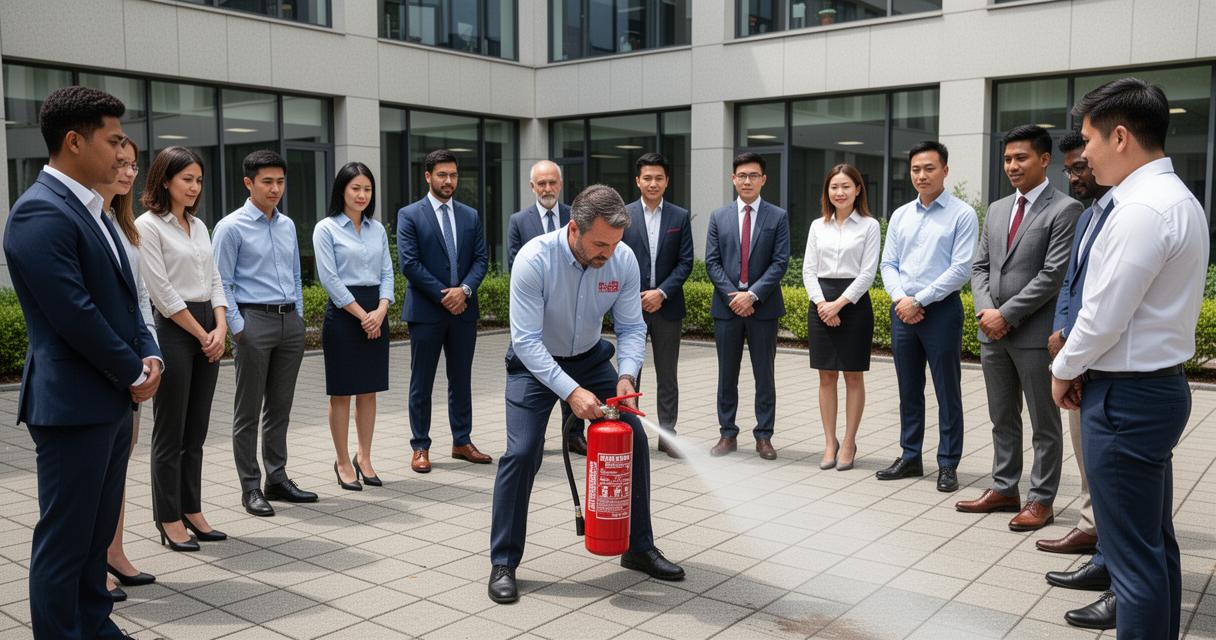
Staff fire training is a cornerstone of effective workplace fire safety. Even the most appropriate extinguisher is of limited value if the people in the building do not know how to operate it correctly or cannot identify which type to use in a given situation. Fire extinguisher training should cover the different fire classes, the colour-coded labelling system, and the circumstances under which staff should attempt to fight a fire rather than evacuating immediately.
One of the most widely taught methods for operating an extinguisher is the PASS technique: Pull the pin, Aim the nozzle at the base of the fire, Squeeze the handle, and Sweep from side to side. This straightforward approach helps staff respond calmly and effectively under pressure. Training should also emphasise that extinguishers are tools for managing small, contained fires — if a fire has grown beyond the initial stage, the priority must always be evacuation and alerting the emergency services.
A well-rounded approach to fire safety regulations and business preparedness brings together the right equipment, conscientious maintenance, and a workforce that is confident in its response. Investing in all three not only protects employees and premises but also demonstrates the duty of care that every responsible employer is obliged to uphold.